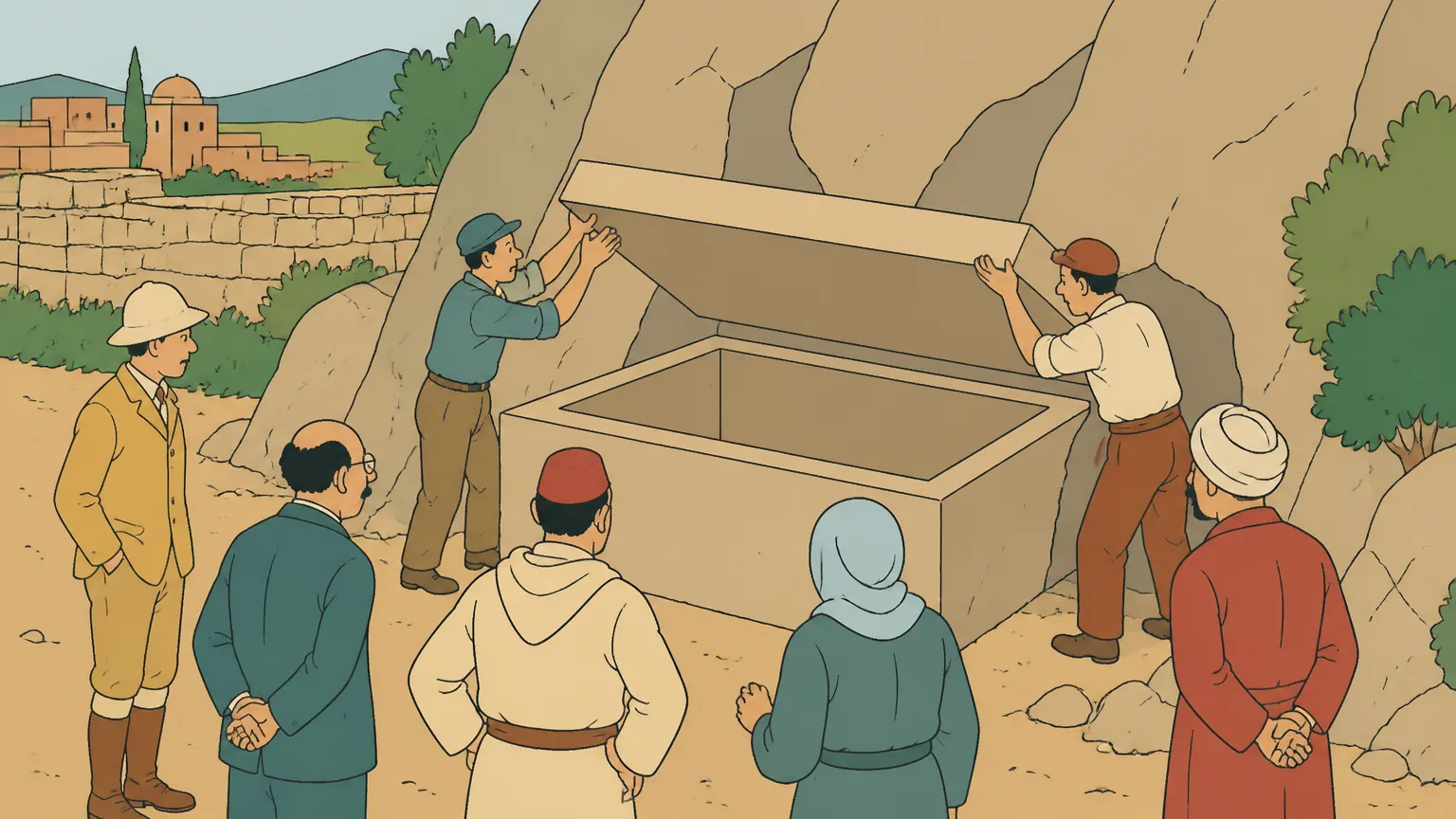

The tomb in Israel and the myth of the Nazarene's death
Frederick, having seen a television programme about a tomb found in Israel, asks whether it could be the Nazarene's.
The Wonders remind him that the Nazarene did not die in Israel and describe the surrounding myth.
The apostles, needing to convince people that their new way of thinking was the way, created a mythical individual — effectively a new god — and, given their lack of education and their continued belief in witchcraft and paganism despite the Nazarene's one-God teaching, elevated him accordingly.
Claiming he died and rose from the dead secured their own continuity as leaders; admitting he had simply survived and left would have made them unimportant and let followers go to him instead.
Christianity, they say, did not begin with the Nazarene but much later, and the paganistic perspective formed the myths around his death, which people have been trying to locate ever since.
They describe a current worldwide effort to prove the validity of his death and of the myths in order to justify Christianity's foundations, at a time when Christianity is questioned by Islam, to a lesser degree by Jewish people who saw him as a prophet, by the New Age movement (which nonetheless still uses many Christian concepts), by a current book and film, and by the Wonders themselves, who state plainly that he did not die but lived, and did not die in Israel.
Taken out of Kept. Undo · Back to Kept
The vault is still being added to. Hear about new questions →