The mind's fear of ceasing to exist, and the child-parent-grandparent analogy
Frederic says he needs to keep questioning.
The Wonders affirm his curiosity but repeat that his mind is afraid of letting go of control because it fears it would then cease to exist; they keep reassuring both him and his mind that it will exist, only in a different relationship than it now holds.
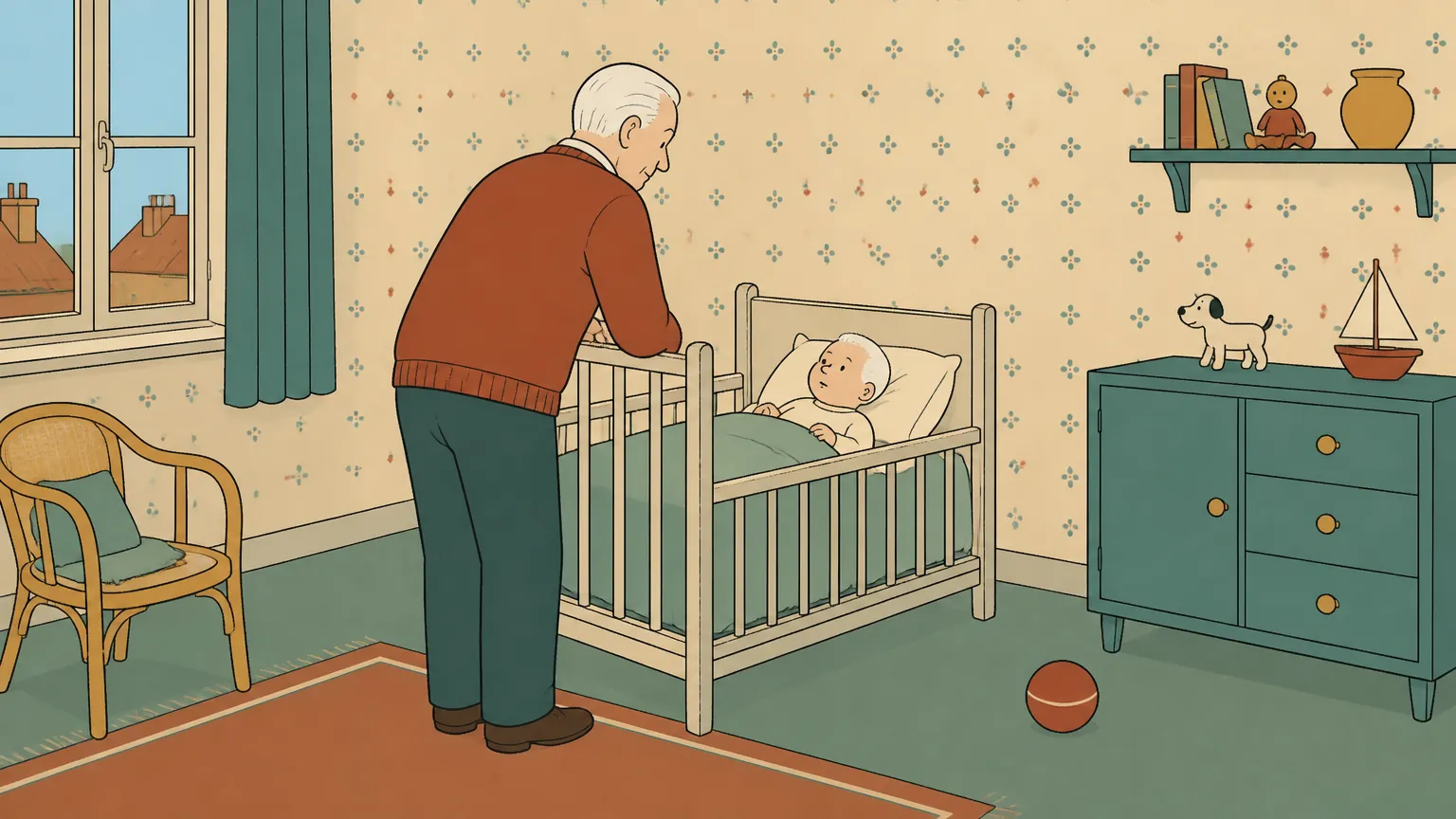
To describe that relationship they offer an analogy of the life cycle: as a child one's parents are all-consuming and all-important; as a teenager one pushes against them to define oneself and make one's own choices; in one's twenties and thirties life becomes survival, stress, money and getting by; then one's children repeat the process and one sees it from the parent's side rather than the child's, noticing a movement; and eventually one becomes the grandparent, the wise one.
They ask how astonishing it would be to have understood at birth that one is already the wise grandparent - every perspective and every choice would differ, because one would understand the interrelationship between oneself and everyone around, no longer subjugated, no longer seeing oneself as child to parent or parent to child but simply as existing and knowing that within that existence a choice can be made.
Most people only glimpse this on their deathbeds.
They present this, admittedly inaccurate, as a picture of the relationship between his mind - the child trying to grow up into the adult self - and himself, the self who already is the wise grandparent, offering it as something for his mind to chew on.
Taken out of Kept. Undo · Back to Kept
The vault is still being added to. Hear about new questions →