Simplicity of existence versus the mind's need to control and solve
Frederic observes that when judgment is removed everything becomes very simple.
The Wonders confirm that the simplicity of existence is that it is, and that it is the mind and its judgments that complicate it.
They point to his experience at work, where organizations complicate what he can do in minutes and pay him well for it, inviting him to see that same pattern in himself.
The absurdity of humanity is the belief that existence can be controlled.
Frederic notes that when he sees the pattern in himself his first reflex is to control it, change it or solve it; he is told there is nothing to solve - 'just choose'.
Even in the session it does not matter what he asks: in choosing, he receives whatever is beneficial in the moment, whereas controlling by fixing a list of questions yields only the benefit of that control.
He acknowledges that the most important things he has received were never anticipated or controlled, citing that he once wanted to remain single and chose differently - which illustrates that choices are meant to be changed, not held for life.
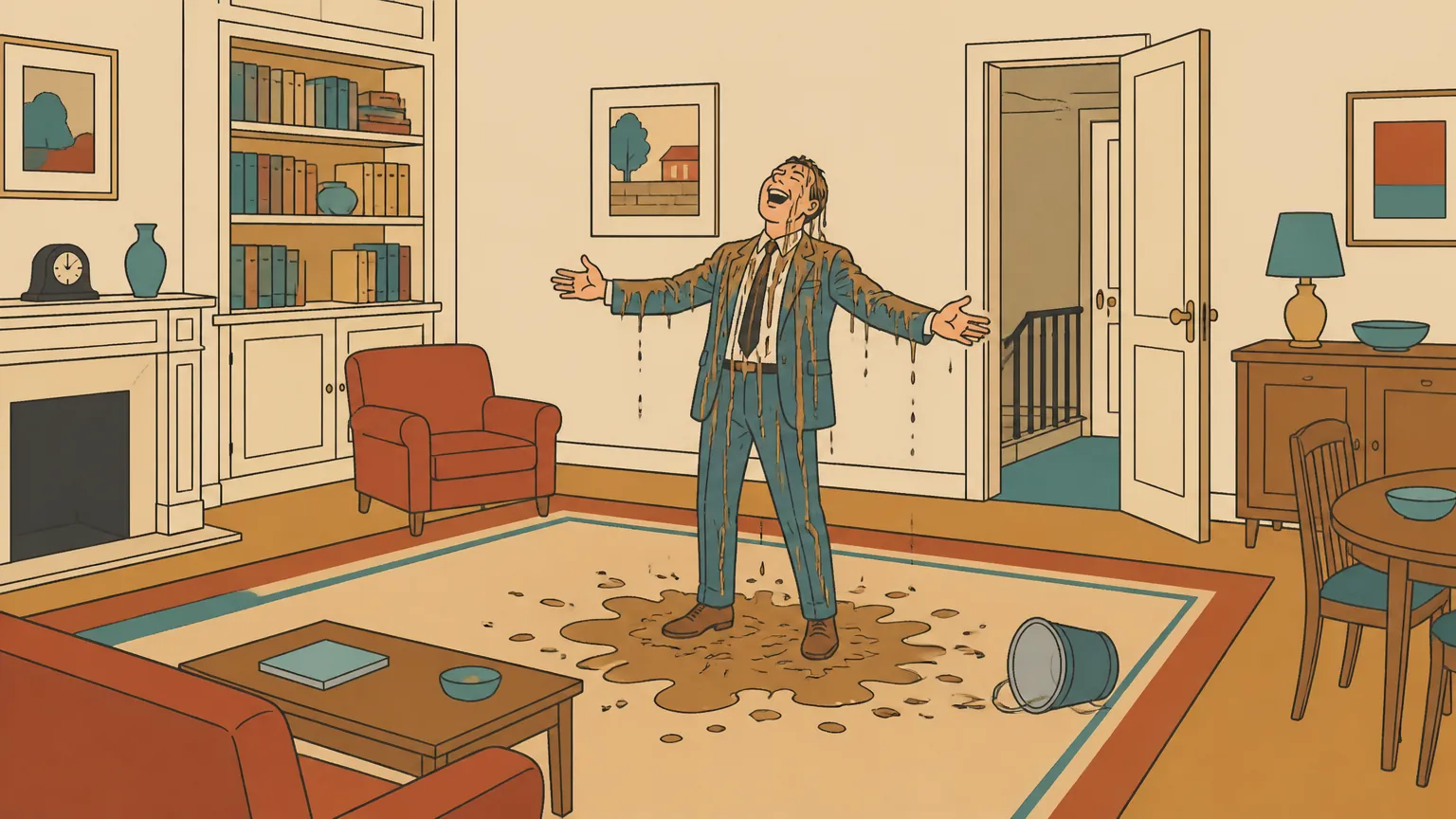
The closing image: you cannot control a bucket of tea being thrown on your head, but you are in charge of how you respond - yelling and threatening, or laughing at an amazing moment that gets you out of your mind - and he need not judge which reaction he has.
Taken out of Kept. Undo · Back to Kept
The vault is still being added to. Hear about new questions →