Questions as movement, doubt, and the mind's refusal to give up being in charge
Frederic observes that questions belong to the mind and that questions bring movement while answers seem to stop it.
The Wonders note that he has lived from and prided himself on his mind his whole life, and that his father and family valued the mind as an existence rather than as a tool; his mind resents this and believes it cannot question once it becomes the tool.
Frederic says he is never satisfied with any answer, and they tell him to keep digging - asking why he is not satisfied, what is missing from the answer, what he is not seeing.
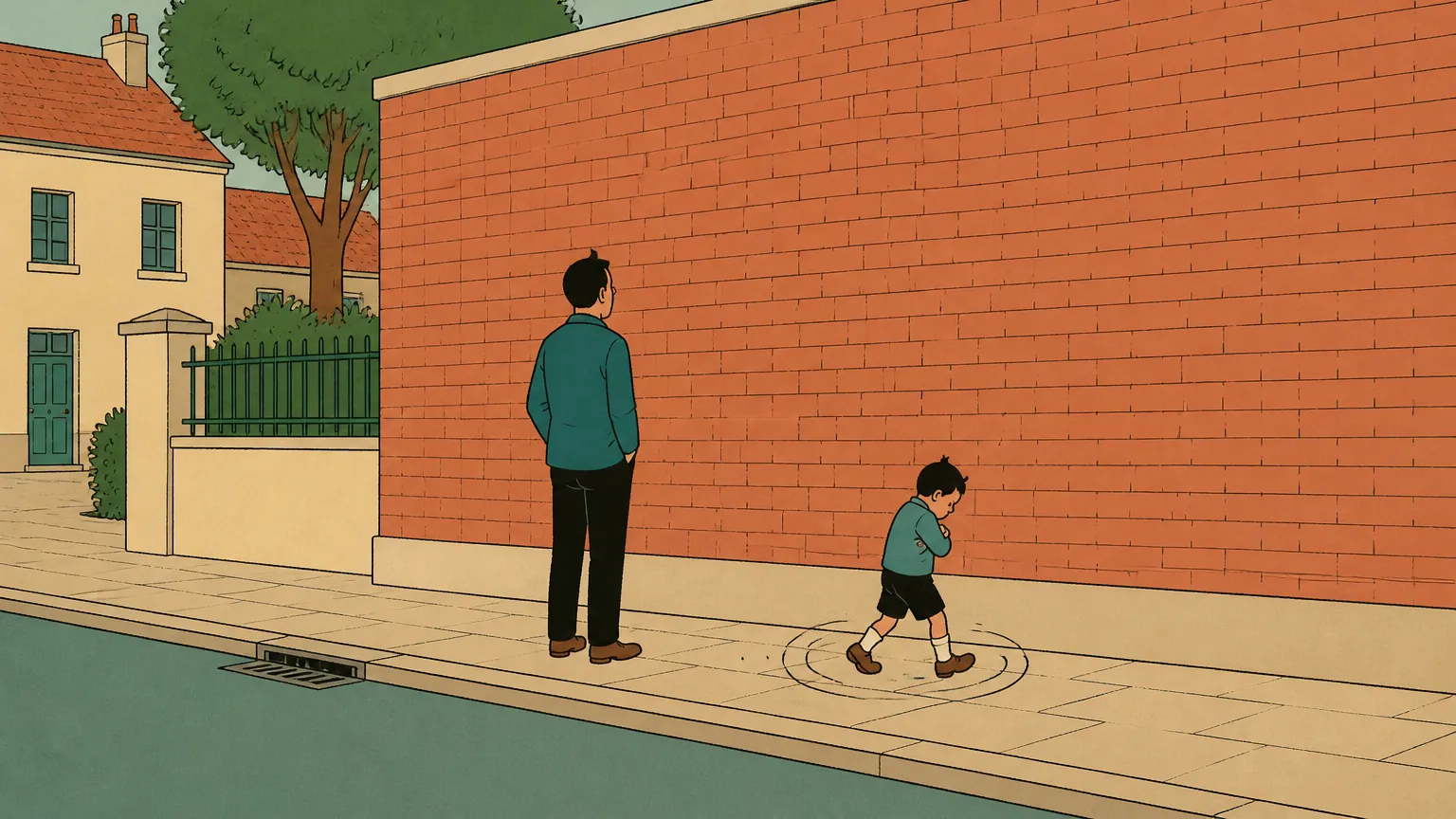
He replies that as long as he cannot see what he is not seeing he stays in the same place; they disagree, saying that if he keeps asking the same question and getting the same answer, the mind will eventually see the wall and start looking around it.
The way through is not the mind: the mind questions, but the answers will not make sense to it.
What he is looking for is an answer the mind cannot fathom, understand, comprehend or accept, yet which feels so completely absolute that there is no doubt it is the answer.
Frederic says he doubts everything and anything, which the Wonders attribute to living in his mind: the self knows, and in knowing there is trust, while the mind does not trust because its very purpose was to question the existence it finds itself in - and over time, because it produced an answer to every question, it came to see itself as in charge.
At some point, they say, one must question to the point of finding out one is not in charge.
Frederic relates this to his current situation: he has been on holiday and enjoyed himself but will need money and to go back to work, and now that he sees he is not in charge he is resisting and not moving.
The Wonders name this as the mind behaving like a petulant child - 'if I'm not in charge, then to hell with it'.
Their answer is that if the mind does not make the choices he commands, such as finding a job, the mind will eventually be destroyed, and self-destruction is what it fears most; but there is much space between here and there, and the mind may hold out along the way.
He is the one in charge, and should tell the mind that it is valuable and needed - for navigating third-dimensional reality, getting a job, working on a computer, dialling a phone - while the knowing comes from him.
This is not minimizing the mind but redirecting its value from controlling everything to serving in a particular direction, and if he genuinely values it as the tool it is meant to be it will respond, because like a child it responds to acknowledgement and praise.
Taken out of Kept. Undo · Back to Kept
The vault is still being added to. Hear about new questions →